Grain-free dog food: pros and cons according to the studies
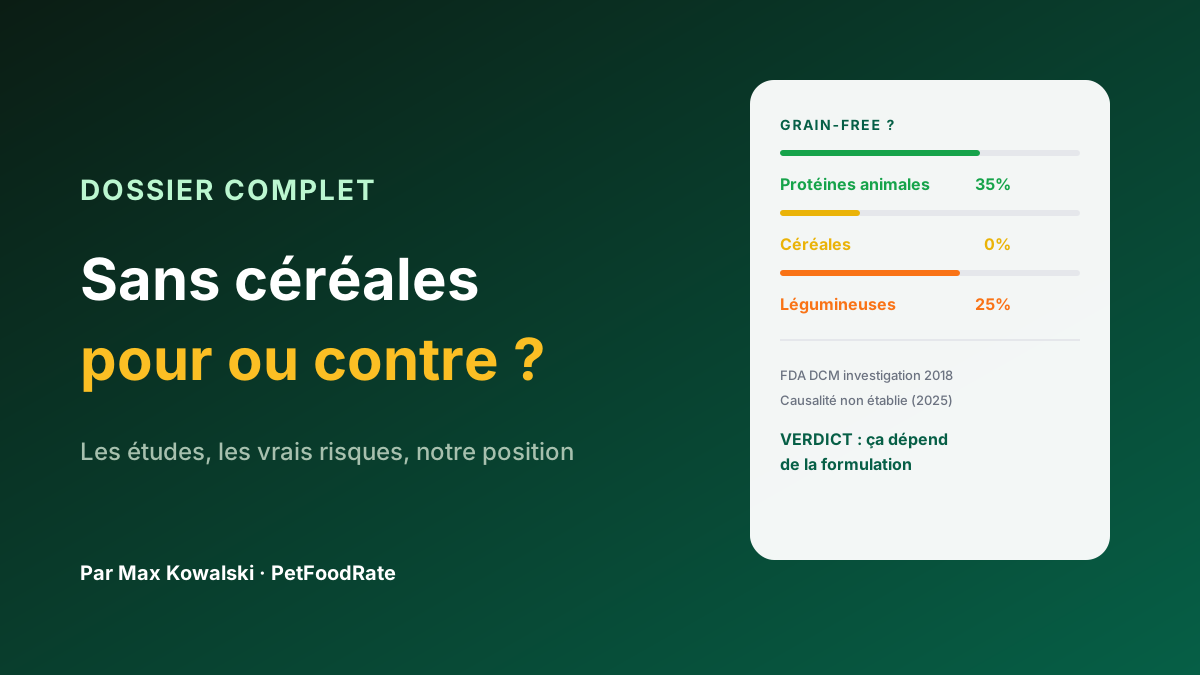
Grain-free has been the number one marketing argument in premium pet food since 2010. Orijen, Acana, Taste of the Wild, Wellness CORE, Carnilove: every brand that scores A in our database is grain-free. But does grain-free automatically mean better? The answer is more nuanced than the marketing suggests.
What grain-free does well
The first advantage is real and measurable: when you remove corn, wheat and sorghum (the cheap cereals that budget brands use as filler), the formula is forced to use more animal protein and higher-quality starches like sweet potato or lentils.
The numbers speak for themselves. A well-formulated grain-free bag typically contains 30 to 38 percent crude protein, versus 20 to 25 percent for a grain-inclusive bag at the same price. The gap is significant because protein is the most expensive macronutrient, and brands that remove cereals must compensate with meat.
The second advantage concerns food allergies. According to a study published in BMC Veterinary Research (Mueller et al., 2016), wheat is the most common cereal allergen in dogs, followed by corn. The study analysed 297 dogs with confirmed food reactions and found that 13 percent reacted to wheat and 4 percent to corn. Going grain-free eliminates both sources at once.
The third advantage is glycaemic index. Refined cereals (corn, white wheat, white rice) have a high GI that causes insulin spikes after meals. Grain-free starches like sweet potato (GI 44 vs 73 for white rice) or lentils (GI 29) offer more stable energy release. For sedentary or overweight dogs, this difference matters over the long term.
The flip side: the FDA dilated cardiomyopathy (DCM) controversy
In July 2018, the US Food and Drug Administration (FDA) published a safety alert about a growing number of dilated cardiomyopathy (DCM) cases in dogs fed grain-free diets high in peas and lentils.
The investigation was triggered by veterinary reports across the US. Between January 2014 and April 2019, the FDA received over 560 reports of DCM potentially linked to diet. The most affected breeds were Golden Retrievers, Labrador Retrievers, German Shepherds, Dobermans, and large mixed breeds.
The main hypothesis: legumes (peas, lentils, chickpeas) in large quantities in grain-free formulas may interfere with the absorption or metabolism of taurine, an amino acid essential for cardiac muscle. Unlike cats who cannot synthesise taurine at all, dogs can produce it from methionine and cysteine. But if this production is disrupted by a dietary factor (such as excess legume fibre binding sulphur amino acids in the intestine), the dog can develop a functional taurine deficiency even with theoretically adequate intake.
What studies showed: a study published in PLoS ONE (Kaplan et al., 2018) found that some dogs diagnosed with DCM had low blood taurine levels and were fed diets with peas and lentils as primary ingredients. After diet change and taurine supplementation, some dogs showed improvement in cardiac function.
What studies did not show: as of 2025, seven years after the investigation opened, the FDA has not established a causal relationship between grain-free diets and DCM. The FDA December 2022 update report acknowledges that "the relationship between diet and DCM remains insufficiently understood" and that "further research is needed".
The veterinary community remains divided. Dr. Joshua Stern, veterinary cardiologist at UC Davis, published work suggesting a possible link. Conversely, Dr. Ryan Yamka, a board-certified nutritionist, criticised the methodology of FDA reports (no control group, non-standardised DCM diagnosis, reporting bias after media coverage of the alert).
What this means for your dog
If you feed your dog a quality grain-free food (Orijen at 92/100, Acana at 90/100, Taste of the Wild at 88/100), here is what we know:
The risk is probably low. Premium brands that score A in our database use identified fresh meats as the primary protein source, not legumes. Peas and lentils are present but in secondary quantities (positions 3-5 on the list, not positions 1-2).
Higher-risk brands are those that put peas or lentils in first or second position on the ingredient list. When pea protein is used to inflate the overall protein percentage without adding meat, that is the scenario the FDA flagged. We systematically note this pattern in our product pages and deduct transparency points.
Large breeds need more attention. Golden Retrievers, Labradors, Dobermans and large breeds are genetically predisposed to DCM regardless of diet. If you own one of these breeds and feed grain-free, discuss annual blood taurine testing with your vet.
Rotation helps. Alternating between a grain-free and a quality grain-inclusive food (for example Hill's Sensitive Stomach at 74/100 with rice and barley, or James Wellbeloved at 73/100 with rice) theoretically reduces the risk of accumulating any potential anti-nutritional factor.
The ingredient list test: how to spot a good vs bad grain-free
The single most reliable tool you have as a buyer is the ingredient list. In most countries, ingredients are listed by weight before processing, heaviest first. A grain-free bag's first five ingredients tell you almost everything you need to know about formulation quality.
A good grain-free ingredient list looks like this:
Fresh chicken (25%), turkey (14%), chicken meal (10%), sweet potato (8%), lentils (6%), chicken fat (5%), peas (4%), salmon oil (2%)...
This is close to Orijen Original Adult's formula (92/100). Notice what it tells you: two named fresh meats dominate the list by weight. The starch source (sweet potato) appears fourth, well behind the protein sources. Legumes (lentils, peas) are present but occupy positions 5 and 7 - they contribute fibre and micronutrients, not bulk protein. Fat comes from a named animal source (chicken fat), and the inclusion of salmon oil signals deliberate omega-3 formulation. Every ingredient has a nutritional purpose.
A bad grain-free ingredient list looks like this:
Pea protein (22%), pea starch (18%), chicken meal (12%), peas (9%), lentils (8%), sunflower oil (4%), dried egg (3%)...
This is the pattern the FDA flagged, and the pattern we penalise in our scoring methodology. Pea protein and pea starch in the top two positions mean the brand is building its protein percentage on plant-based nitrogen, not meat. Chicken meal appears third but in smaller quantity than the combined legume components. The result is a bag that legally qualifies as "grain-free" and "high protein" (the label might say 30% crude protein) while delivering most of that protein from plant sources with incomplete amino acid profiles relative to muscle meat. Compare several examples side by side on our product comparison tool.
Three quick rules for reading a grain-free label:
- Fresh or named meat should appear in the first two positions. "Chicken" or "fresh chicken" beats "poultry meal" beats "pea protein" at position one.
- No more than two legume ingredients in the first six positions combined. If you count peas, pea protein, pea starch, lentils, and chickpeas all clustering in the top six, the formula is legume-heavy.
- Named fat sources only. "Chicken fat" or "salmon oil" is good. "Vegetable oil" or "animal fat" is a transparency red flag.
You can cross-reference these rules against the ingredient database on PetFoodRate, which flags legume overrepresentation for every product we have rated.
The glycaemic index advantage in detail
One of the strongest practical arguments for grain-free is glycaemic management - and it is more significant than most owners realise. The glycaemic index (GI) measures how quickly a carbohydrate raises blood glucose on a scale of 0 to 100. For context, pure glucose is 100.
Mainstream kibble relies heavily on high-GI cereals because they are cheap, calorie-dense, and easy to extrude into pellets. Grain-free formulas replace these with lower-GI alternatives that produce slower, more stable glucose curves.
| Carbohydrate source | Glycaemic Index | Typical use |
|---|---|---|
| White rice | 73 | Grain-inclusive mainstream kibble |
| Corn (maize) | 70 | Budget grain-inclusive kibble |
| Barley | 28-35 | Quality grain-inclusive kibble |
| Oats | 49-58 | Quality grain-inclusive kibble |
| Sweet potato | 44 | Premium grain-free kibble |
| Green peas | 22 | Grain-free kibble (secondary) |
| Lentils | 29 | Grain-free kibble (secondary) |
| Chickpeas | 28 | Grain-free kibble (secondary) |
The practical implications for dogs are significant. After a high-GI meal, blood glucose peaks sharply within 30-60 minutes, triggering a large insulin response that drives glucose into cells rapidly. The result is a fast energy boost followed by a crash - which is why many dogs seem restless or hungry again quickly after meals based on corn or white rice.
A meal based on sweet potato and lentils produces a shallower, longer glucose curve. The dog absorbs energy more gradually across 2-4 hours. For working dogs or highly active dogs, this translates to more sustained endurance. For sedentary or overweight dogs (a large proportion of the Western pet population), it means fewer insulin spikes, which over months and years reduces the metabolic load on the pancreas.
One nuance worth noting: the GI of any ingredient changes when it is combined with protein and fat, and it changes again during the high-heat extrusion process used to make kibble. Sweet potato extruded at 140 degrees Celsius for three seconds has a higher effective GI than boiled sweet potato served whole. This is why we reference GI values as indicative rather than absolute - the relative ranking (corn > white rice > oats > sweet potato > lentils > peas) holds true even after accounting for processing effects. See our full scoring methodology for how we factor this into nutritional balance scores.
The GI advantage is one reason that even when the DCM debate gives you pause about legumes, a grain-free formula built primarily on sweet potato with moderate legumes at positions 4-6 remains a sound nutritional choice for most adult dogs. Browse the best grain-free options by profile on PetFoodRate.
Common myths about grain-free
The grain-free category attracts strong opinions on both sides, and a handful of persistent myths distort buying decisions in both directions. Here are the three we see most often.
Myth 1: grain-free means low-carb
This is false, and it is the single most common misconception we encounter. Removing grains does not remove carbohydrates. It replaces one carbohydrate source (cereals) with another (legumes, sweet potato, tapioca, cassava). A budget grain-free formula with peas in positions 1, 2, and 3 can contain 40 to 50 percent digestible carbohydrate by dry matter - comparable to many grain-inclusive formulas.
True low-carb dog food exists, but it typically means fresh or raw feeding, freeze-dried diets, or very specifically formulated kibble that replaces starches with fibrous vegetables. These products are distinct from standard grain-free kibble and will explicitly state a low-carbohydrate content on the guaranteed analysis. If low-carb is your goal for a diabetic or obese dog, check the guaranteed analysis for total carbohydrate (calculated as: 100 minus moisture minus protein minus fat minus ash minus fibre) rather than relying on the "grain-free" label alone.
Myth 2: grain-free prevents allergies
This is partly true but widely overstated. The Mueller et al. (2016) study cited above found that wheat and corn are genuine allergens in a subset of dogs - but the same study found that beef was the most common food allergen overall (34 percent of reactions), followed by dairy (17 percent), then wheat (13 percent). Chicken came in at 15 percent.
The implication is important: if your dog has a food allergy, the statistically most likely culprit is a protein source (beef, chicken, dairy), not a grain. Switching to a grain-free food that still contains chicken or beef does nothing to address the actual allergen. True elimination diet trials use novel protein sources (venison, rabbit, kangaroo, insect) that the dog has never been exposed to - the grain/no-grain distinction is secondary in clinical allergy management. Our ingredient pages flag the top 10 most common canine allergens so you can cross-check any formula before buying.
Myth 3: grain-free is always better than grain-inclusive
This is false, and the comparison table at the bottom of this article demonstrates it clearly. A quality grain-inclusive formula built on fresh chicken, barley, and oats (Blue Buffalo Life Protection at 76/100) scores significantly higher than a budget grain-free formula built on pea protein and pea starch (various brands in the C-D range). The label does not determine the quality - the formulation does.
Barley deserves specific recognition here. With a GI of 28-35 (lower than sweet potato), beta-glucan content that supports immune function and gut microbiome diversity, and a complete amino acid profile that complements meat protein, barley is one of the most nutritionally justified cereal ingredients in pet food. Oats bring similar benefits plus soluble fibre (beta-glucan) and a relatively high protein content for a cereal at around 13 percent. A formula that uses these two cereals deliberately, as minor secondary ingredients behind a named meat, is not a nutritional compromise.
The takeaway: evaluate the full ingredient list and the scoring dimensions (protein quality, nutritional balance, absence of undesirables, transparency, species adaptability), not just the presence or absence of grains.
Our position at PetFoodRate
We do not penalise grain-free products in our scoring. And we do not favour them either. Our algorithm evaluates five dimensions: protein quality, nutritional balance, absence of undesirables, transparency, and species adaptability. The presence or absence of cereals is not a direct criterion.
What we do penalise is legume overrepresentation. If peas + lentils + chickpeas constitute the first three ingredients after the meat (which happens with some budget grain-free brands), we deduct transparency and nutrition points because the formula uses legumes as cheap protein filler, exactly the way mainstream brands use corn and wheat.
The real criterion: formulation quality, not the label
A grain-free with fresh chicken first at 25 percent, turkey second, and sweet potato third is an excellent product (that is Orijen's formula, 92/100).
A grain-free with "pea protein" first and "pea starch" second is a mediocre product using the "grain-free" label as marketing to charge more for a bag whose primary protein is plant-based.
A grain-inclusive with chicken first, barley second and oats third is a good product (that is Blue Buffalo's formula, 76/100). Barley and oats are quality cereals with moderate GI and beneficial beta-glucans for the immune system.
A grain-inclusive with corn first, wheat second and sorghum third is a poor product (that is Pedigree, 42/100) regardless of the word "complete" or "balanced" on the front.
Summary
| Type | Example | Score | Verdict |
|---|---|---|---|
| Premium grain-free | Orijen Original | A (92/100) | Excellent |
| Value grain-free | Taste of the Wild | A (88/100) | Very good |
| Premium grain-inclusive | Blue Buffalo Life Protection | B (76/100) | Good |
| Vet grain-inclusive | Hill's Medium Adult | B (72/100) | Decent |
| Budget grain-inclusive | Pedigree Vital Protection | D (42/100) | Avoid |
| Budget grain-free (peas first) | Various | C-D | Caution |
The question is not "with or without grains". The question is "what are the grains (or legumes) replaced with, and is meat genuinely the first ingredient?"
Compare for yourself: Best grain-free dog food | All rankings | Compare two products
For the French version: Croquettes sans cereales : pour ou contre ?
Frequently asked questions
How does grain-free dog food typically compare to grain-inclusive options in terms of protein content?
Grain-free dog food generally offers a significantly higher crude protein percentage compared to grain-inclusive alternatives at a similar price point. This difference arises because removing cheap cereal fillers like corn or wheat necessitates the inclusion of more expensive animal proteins and quality starches. Studies show grain-free formulas often contain 30 to 38 percent crude protein, while grain-inclusive bags might offer 20 to 25 percent.
What specific ingredients are commonly used to replace grains in grain-free dog food formulas?
In grain-free dog food, common cheap cereals such as corn, wheat, and sorghum are removed from the formula and replaced with higher-quality starches and protein sources. These replacements often include nutrient-dense options like sweet potato, lentils, peas, or chickpeas. These alternative ingredients contribute to the overall nutritional profile, including protein and fiber content, without using traditional grains.
Is grain-free dog food generally more expensive than traditional grain-inclusive formulas?
The price of grain-free dog food can be comparable to premium grain-inclusive options, especially when considering the nutritional value offered. While protein is an expensive macronutrient, well-formulated grain-free bags often provide 30 to 38 percent crude protein at a similar price point to grain-inclusive bags containing 20 to 25 percent. This suggests that the cost per unit of protein can be competitive for some grain-free products.
Are there any potential health concerns or risks associated with feeding a dog a grain-free diet?
While the provided excerpt focuses on the benefits, some studies and veterinary discussions have raised concerns about a potential link between certain grain-free diets and dilated cardiomyopathy (DCM) in dogs. This concern is often associated with diets high in legumes and potatoes as primary carbohydrate sources, potentially displacing other essential nutrients like taurine. Pet owners should consult their veterinarian to determine the most appropriate diet for their dog's individual needs.
Sources
-
FDA Investigation into Potential Link Between Certain Diets and Canine Dilated Cardiomyopathy, fda.gov
-
Mueller RS, Olivry T, Prelaud P. "Critically appraised topic on adverse food reactions of companion animals: common food allergen sources." BMC Vet Res. 2016;12:9
-
Kaplan JL, Stern JA, Fascetti AJ, et al. "Taurine deficiency and dilated cardiomyopathy in golden retrievers fed commercial diets." PLoS ONE. 2018;13(12)
-
FEDIAF Nutritional Guidelines for Complete and Complementary Pet Food for Dogs and Cats, European Pet Food Industry Federation, europeanpetfood.org
-
AAFCO Dog Food Nutrient Profiles, Association of American Feed Control Officials, aafco.org
-
Max Kowalski, Ingredient Research, PetFoodRate
