Meilleure pâtée chat 2026 : classement indépendant A à E
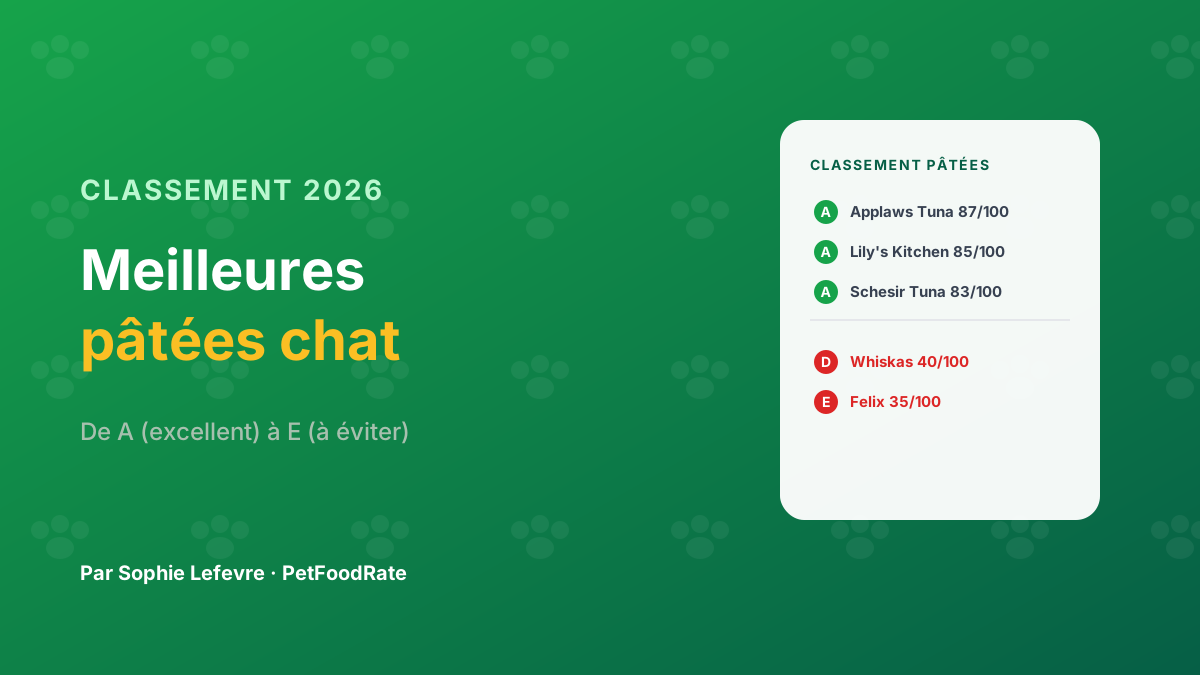
Wet food is not a supplement for cats. It should be the foundation of feline nutrition. Here is why, and here is the full ranking.
Why wet food is essential for cats
Cats are obligate carnivores descended from Felis silvestris lybica, the African wildcat, a desert predator that got 70 to 80 percent of its water from prey. Wet food contains 75 to 82 percent moisture. Kibble contains 8 to 10 percent. A cat fed exclusively on dry food should compensate by drinking, but most do not drink enough.
The consequences are well-documented:
- Chronic kidney disease (CKD): the most common cause of death in cats over 10. According to Jepson et al. (2009, JAVMA), CKD affects approximately 30 percent of cats over 15. Chronic mild dehydration from dry-only diets is a recognised contributing factor.
- Lower urinary tract disease (FLUTD): struvite and calcium oxalate crystals, urethral blockages in males (surgical emergency, 600-1,200 EUR). The International Society of Feline Medicine (ISFM) recommends increased water intake as a first-line prevention measure.
- Constipation in older cats with reduced mobility.
The International Renal Interest Society (IRIS) classifies CKD into 4 stages. Stages 3 and 4 cost 50 to 100 EUR per month in medications and monitoring. Prevention through quality wet food costs a fraction of that.
How we score wet cat food
Every product is evaluated on a 100-point scale using our methodology across 5 dimensions:
| Criterion | Weight | What it measures for cat wet food |
|---|---|---|
| Proteins | 35% | Percentage of named meat by species, position on the list |
| Nutrition | 20% | Macro balance, Ca:P ratio, omega-3/omega-6, taurine |
| Undesirables | 20% | Absence of sugars, colorants, synthetic preservatives |
| Transparency | 15% | Named species, percentages declared, traceability |
| Adaptability | 10% | Cat-specific formulation (obligate carnivore, taurine/AA needs) |
Wet food has a structural advantage in adaptability: its water content matches feline physiology better than kibble. But many supermarket wet foods cancel this advantage with added sugars, colorants, and vague by-products that tank the other dimensions.
Our top 5: A-grade wet cat food
1. Applaws Natural Tuna Fillet - A (87/100)
75 percent visible tuna fillet in cooking water. When you open the can, you see identifiable fish chunks, not a homogeneous paste. The recipe: tuna, cooking water, salmon oil, taurine, vitamin E. Five ingredients. Zero cereals, zero sugar, zero thickeners, zero colorants.
What makes Applaws genuinely different is the sourcing and the cooking method. The tuna is pole-and-line caught in the Pacific, a practice that dramatically reduces bycatch compared to industrial trawling, and the fish is cooked once, inside the can, at low temperature. This single-cook process preserves more amino acids - including the taurine that cats cannot synthesise in sufficient quantities - than the industrial double-cook method used by most mass-market brands, where meat is pre-cooked before canning and loses a significant share of its volatile nutrients. The result is a broth that is genuinely rich in free amino acids, which explains both the aroma and the strong palatability scores in independent feeding trials. The absence of any gelling or thickening agent means the texture is entirely determined by the natural fibre of the fish muscle, producing a shredded, moist product that is easy for cats with dental issues or older cats with reduced jaw strength to eat comfortably.
Important note: Applaws Natural is a complementary food (low in total fat). It cannot be 100 percent of your cat's diet. The reason is not a deficiency in protein quality but in overall energy density and certain fat-soluble vitamins that require a consistent lipid matrix to be delivered at adequate levels. Rotate with a complete food or supplement with quality kibble like Orijen Cat. Many owners use Applaws as the morning meal and a complete pate as the evening meal, which is a sound nutritional strategy.
Sub-scores: Proteins A, Nutrition B (complementary penalised), Undesirables A, Transparency A, Adaptability A.
Price: approximately 18 EUR per kg, or 3.60 EUR per day for a 4 kg cat.
2. Lily's Kitchen Salmon Terrine - A (85/100)
60 percent identified salmon, B Corp certified, grain-free. Unlike Applaws, this is a complete food, meaning it can be your cat's sole diet without risk of deficiency. The recipe includes added taurine, minerals, and a balanced lipid profile.
The salmon used in Lily's Kitchen is sourced from farms certified to the Aquaculture Stewardship Council (ASC) standard, and the brand publishes the geographic origin of its ingredients on its website - UK and northern European fisheries for the fish, UK and EU farms for any supplementary animal protein. This level of supply chain transparency is rare in the pet food category and directly contributes to the high transparency sub-score. From a cooking process perspective, Lily's Kitchen uses a gentle steam-cooking method at lower temperatures than conventional retort sterilisation. This matters for texture: the finished terrine holds together well, has a consistent moisture distribution throughout the tin, and avoids the dry, crumbly centre that afflicts many cheaper pates that are over-sterilised for extended shelf life at the expense of palatability. The complete nutritional profile - verified against FEDIAF and NRC guidelines - means the calcium-to-phosphorus ratio stays within the 1:1 to 2:1 range recommended for adult cats, and the omega-3 to omega-6 ratio is controlled through the salmon oil addition, which helps with coat condition and supports the inflammatory response in cats prone to skin sensitivities.
Lily's Kitchen is one of the few brands that publishes the geographic origin of its ingredients (UK and Europe), which boosts the transparency score. For cat owners who want a single product they can feed without rotation, it is the most complete and traceable option in the A tier.
Price: approximately 12 EUR per kg, or 2.40 EUR per day.
3. Edgard and Cooper Cat Salmon Pate - A (84/100)
55 percent identified salmon, added taurine, omega-3 via salmon oil. Complete food, grain-free, sugar-free.
The major advantage of Edgard and Cooper: supermarket availability. Available at Carrefour, Leclerc, and Monoprix in France, and at major retailers across Belgium, the Netherlands, and the UK. It is the only A-grade product in this ranking that you can buy during a regular grocery shop.
Price: approximately 10 EUR per kg, or 2.10 EUR per day.
4. Schesir Tuna with Aloe - A (83/100)
Italian premium brand. 70 percent visible tuna, set with aloe vera rather than corn starch. Ultra-short recipe: tuna, cooking water, aloe vera, vitamin E. Complementary (like Applaws).
5. Ultra Premium Direct Cat Pate - A (82/100)
55 percent fresh chicken, grain-free, direct-to-consumer at 6.50 EUR per kg. The best value-for-money A-grade wet cat food available. Complete food with added taurine, minerals, and vitamins.
The DTC model (no distributor margin) allows A-grade nutrition at a daily cost of 1.30 EUR, which is less than Whiskas (1.37 EUR per day).
The mid-tier: grades B-C
| Product | Score | Named meat | Notes |
|---|---|---|---|
| Almo Nature Classic | B (76/100) | 55% tuna | Complementary. Good transparency, average lipid profile |
| Fancy Feast Classic | C (55/100) | 14% chicken | No sugars. Unidentified by-products. Best "supermarket budget" choice |
| Sheba Classic Terrine | C (52/100) | 14% chicken | Better than Whiskas but same vague by-products (Mars) |
The worst: grades D-E
| Product | Score | Issues |
|---|---|---|
| Whiskas Chunks in Jelly | D (40/100) | 4% meat, vague by-products, added sugars |
| Felix AGAIL Beef | D (44/100) | 4% meat, vague by-products, sugars, vegetable protein extracts |
| Gourmet Gold Mousse | D (42/100) | 4% chicken, "premium" positioning at 9 EUR/kg, misleading |
| Felix Sensations | E (35/100) | 4% meat, colorants E150/E129, sugars, caramel |
The Mars and Nestle duopoly
These four D-E products are manufactured by Mars (Whiskas, Sheba) or Nestle Purina (Felix, Gourmet, Friskies). Together, these two groups control over 70 percent of the European wet cat food market according to FEDIAF 2023 data. Understanding why this matters for quality requires looking at the economics of concentration.
When two companies hold 70 percent of a market, the competitive pressure to improve formulations is largely removed. The incentive shifts from ingredient quality to brand marketing and shelf placement negotiations. Mars and Nestle Purina spend a combined figure estimated at over 1 billion EUR annually on pet food advertising across Europe. That budget does not go into sourcing better tuna or removing sugar from the recipe - it goes into television spots that show cats enthusiastically eating products that contain 4 percent meat. The 4 percent figure is not an accident or a compromise: it is the legal minimum required under EU Regulation 767/2009 to print the ingredient name on the front of the pack. Both groups have optimised their formulations to hit this floor, then invested the cost savings into marketing budgets that make these products synonymous with "cat food" in the minds of millions of consumers who have never read a label.
The lack of competition also keeps innovation slow. The major reformulations in the Whiskas and Felix ranges over the past decade have been primarily cosmetic: new pouch formats, new flavour names, new graphics on the packaging. The underlying ingredient composition has remained essentially unchanged since the 1990s. By contrast, the independent and challenger brands in the A and B tier of this ranking - Applaws, Lily's Kitchen, Edgard and Cooper, Schesir - have all launched new complete recipes, improved their sourcing transparency, or achieved third-party certifications in the same period. This is what genuine competition looks like. The structural problem for consumers is that these challenger brands represent less than 15 percent of supermarket shelf space in most EU markets, because shelf placement is negotiated on volume and promotional spend, not on ingredient quality.
The entry of private-label premium ranges at retailers like Lidl and Aldi over the past three years has introduced some downward price pressure at the bottom of the market, but has not fundamentally changed the quality landscape. For as long as two companies control distribution, advertising, and the narrative around what constitutes "normal" cat food, the default option for most households will remain a product with 4 percent meat. Awareness, combined with label literacy, is the consumer's primary defence. See our guide to reading pet food labels for the practical tools to navigate this.
The daily cost reality
One of the most persistent myths in pet nutrition is that premium wet food is necessarily expensive. The table below uses a 4 kg adult cat as the reference point, fed on wet food alone at the manufacturer's recommended daily portion.
| Product | Daily portion | Daily cost | Named meat per serving |
|---|---|---|---|
| Whiskas Chunks in Jelly | 250g | 1.37 EUR | 10g (4%) |
| Ultra Premium Direct Cat Pate | 200g | 1.30 EUR | 110g (55%) |
| Edgard and Cooper Salmon Pate | 220g | 2.10 EUR | 121g (55%) |
| Applaws Natural Tuna Fillet | 200g | 3.60 EUR | 150g (75%) |
The UPD figure deserves attention: an A-grade complete wet food with 55 percent fresh chicken costs less per day than Whiskas, the benchmark "affordable" supermarket option. This is possible because Ultra Premium Direct sells exclusively online, cutting out the distributor and retailer margins that typically represent 40 to 60 percent of the shelf price on a branded product. The daily cost gap between Whiskas and UPD is not the 1 EUR most owners assume: it is negative. You are already paying more for worse nutrition.
Applaws at 3.60 EUR per day is genuinely more expensive - but it is worth contextualising. For a 4 kg cat with average veterinary costs, the difference between Applaws and Whiskas is approximately 800 EUR per year. A single urinary blockage requiring emergency surgery and a 48-hour hospitalisation costs 600 to 1,200 EUR. A diagnosis of early-stage CKD followed by a year of phosphorus binders, subcutaneous fluid therapy, and quarterly blood panels costs 400 to 800 EUR per year indefinitely. The economics of preventive nutrition are not marginal over a cat's 15-year lifespan. For more on the cost calculation: Whiskas vs Applaws - what your cat actually eats.
What the label legally means
Understanding how ingredient names on pet food packaging are regulated helps decode what you are actually buying. In the EU, pet food labelling is governed primarily by Regulation (EC) 767/2009 and Directive 2009/90/EC. The key rule is the 4 percent rule: if an ingredient is named on the front of the packaging (for example "with chicken" or "chicken flavour"), it must be present at a minimum of 4 percent of the product. This is the threshold that products like Whiskas, Felix, and Gourmet are optimised to hit. It is not a meaningful nutritional threshold - it is a legal minimum designed to prevent outright fraud.
The naming hierarchy matters. "Chicken" means muscle meat from the species named. "Chicken by-products" or "poultry by-products" means rendered material from the same species - legally permitted, nutritionally variable, and by definition less traceable. "Meat and animal derivatives" is the broadest category: it can include material from any warm-blooded land animal, in any proportion, which changes from batch to batch depending on commodity prices. A product that lists "meat and animal derivatives (including 4% chicken)" is telling you that the dominant protein source is unspecified rendered material from an unspecified range of species, with a legally compliant 4 percent contribution from a named species. This is the formulation behind most D and E grade products in this ranking.
In the US market, AAFCO (the Association of American Feed Control Officials) operates a parallel naming hierarchy with broadly similar logic. "Chicken cat food" requires the named ingredient to constitute at least 70 percent of the product. "Cat food with chicken" requires only 3 percent. "Chicken flavour cat food" requires only a detectable amount sufficient to characterise the flavour. These naming thresholds are very different, which is why a product called "Chicken Dinner" in the US and "with chicken" in the EU can both be legally compliant while containing dramatically different amounts of the named ingredient. When evaluating imported products or brands that operate in both markets, always check the actual declared percentage on the analytical constituents panel, not just the product name.
For a full walkthrough of how to read the ingredients list, the analytical constituents, and the additives declaration on any wet cat food pack, see our guide: How to read a pet food label.
How to transition
Cats are notoriously resistant to food changes. The 5-week protocol recommended by veterinary nutritionists:
- Week 1: a spoonful of new food next to the old. Most cats sniff and ignore. Normal.
- Week 2: mix 25 percent new, 75 percent old in the same bowl.
- Week 3: 50/50.
- Week 4: 75 percent new, 25 percent old.
- Week 5: 100 percent new.
Never starve a cat. Hepatic lipidosis (fatty liver disease) can develop within 48 hours of fasting in cats, a potentially fatal emergency unique to felines. If your cat categorically refuses, try a different brand or texture (pate vs. chunks vs. gravy). The ISFM guidelines recommend trying at least three different premium brands before concluding a cat will not switch.
For more on feline nutritional needs: Why cats need meat, not marketing.
Full cat rankings | Compare two products | Best kibble for cats
For the French version: Meilleures patees chat 2026
Sources
-
International Renal Interest Society (IRIS), iris-kidney.com
-
Jepson R.E. et al., "Evaluation of predictors of the development of azotemia in cats", JAVMA, 2009
-
International Society of Feline Medicine (ISFM), icatcare.org/isfm
-
FEDIAF Annual Report 2023 and Nutritional Guidelines, europeanpetfood.org
-
National Research Council (NRC), "Nutrient Requirements of Dogs and Cats", National Academies Press, 2006 - the reference document for minimum nutrient levels in feline diets, used by FEDIAF and AAFCO as a baseline for their own guidelines
-
AAFCO (Association of American Feed Control Officials), "Official Publication 2024", including the Model Regulations for Pet Food and Specialty Pet Food and the ingredient naming hierarchy thresholds - aafco.org
-
European Commission, Regulation (EC) No 767/2009 on the placing on the market and use of feed, including the 4% labelling threshold for named ingredients
-
B Corp certification, bcorporation.net
-
Aquaculture Stewardship Council (ASC), certification standard for responsibly farmed seafood, asc-aqua.org
-
Sophie Lefevre, Species Nutrition Specialist, PetFoodRate
Frequently asked questions
What is the best wet cat food in 2026?
On PetFoodRate's independent A-E method, A-grade wet cat foods such as Applaws, Lily's Kitchen and Schesir lead, driven by high named-meat content, high moisture and clean labelling. The single best pick depends on your cat: kitten, senior, sensitive or sterilised cats each have a better match in the ranking above.
Is wet food better than dry food for cats?
Wet food has a structural edge: around 78% moisture supports hydration in a species with a low thirst drive, and it is usually higher in animal protein on a dry-matter basis. Good dry food still scores well and costs less per serving. Many owners feed a mix; the wet portion helps water intake.
Are supermarket wet cat foods (Whiskas, Felix, Sheba) any good?
They are safe and complete but mostly score C-D on our method because of low real-meat content (often around 4%) and added sugars. They sit well below the A-grade brands on protein quality and transparency. A modest step up buys a real nutritional improvement for not much more per pouch.
How does PetFoodRate rank wet cat food?
Each wet food earns an A-E grade from five sub-scores: protein quality, nutritional balance, absence of undesirables, ingredient transparency, and species fit (cats are obligate carnivores). Scoring is uniform across every product, with no sponsored brands and no paid placements.
