What is really in Whiskas & Felix pouches (and 4 better picks)
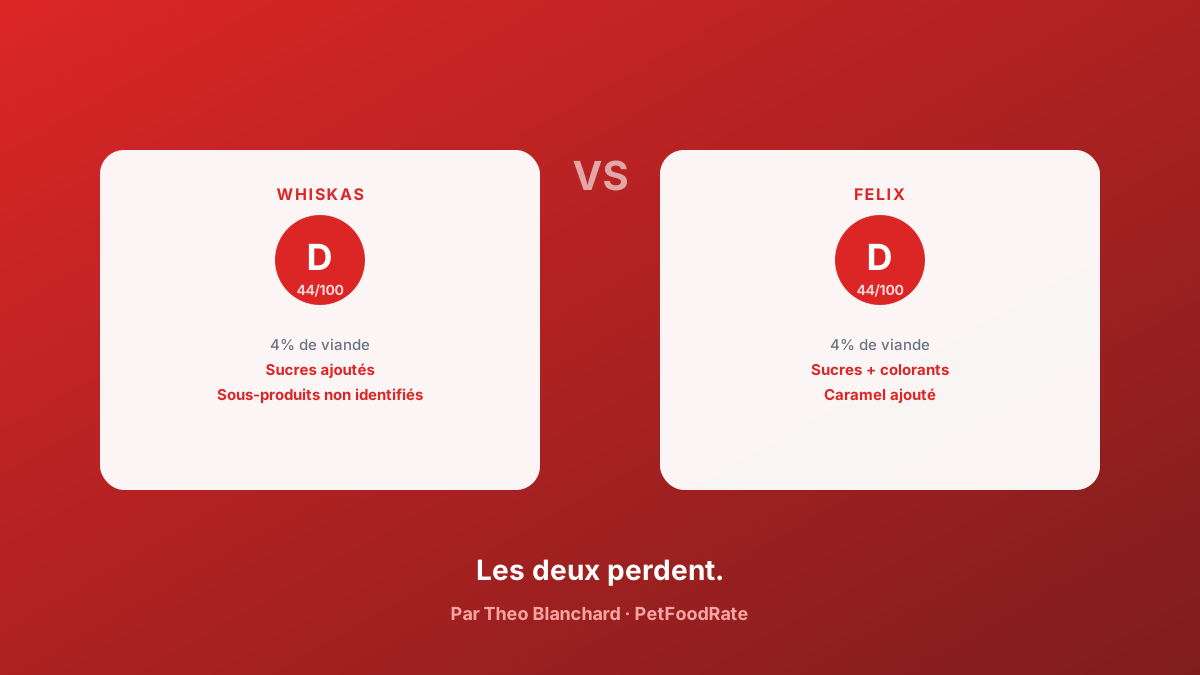
Whiskas and Felix are the two best-selling wet cat food brands in Europe. Together they control over 60 percent of the supermarket wet cat aisle, according to FEDIAF 2023 data. The battle is fierce between Mars (Whiskas, Sheba, Cesar) and Nestle Purina (Felix, Gourmet, Friskies). But is there a winner? We opened the pouches, read the compositions, and scored both using our 5-dimension methodology. Want the short verdict on which one to pick rather than the full teardown? See our Felix vs Whiskas comparison.
The PetFoodRate scores
| Product | Overall score | Proteins | Nutrition | Undesirables | Transparency | Adaptability |
|---|---|---|---|---|---|---|
| Whiskas Adult Beef | D (44/100) | E | D | D | E | B |
| Whiskas Pouches Poultry | D (42/100) | E | D | D | E | B |
| Felix AGAIL Beef | D (44/100) | E | D | D | E | B |
| Felix Sensations | E (35/100) | E | E | E | E | B |
None exceeds a D grade. Felix Sensations drops to E because of added colorants (E150, E129) and caramel. The only dimension where these products score reasonably is adaptability, because both are formulated for cats (obligate carnivores) rather than generic "pets".
What is inside the pouches
Whiskas Adult Beef composition
Meat and animal by-products (of which 4 percent beef), minerals, sugars. That is the entire composition. Three lines.
- 4 percent beef: the European "4 percent rule" (FEDIAF) allows the "with beef" label with only 4 percent of the named ingredient
- Unidentified animal by-products: no species named, the source changes batch to batch based on commodity prices
- Added sugars: listed without percentage, no nutritional justification
Felix AGAIL Beef composition
Meat and animal by-products (of which 4 percent beef), vegetable protein extracts, minerals, sugars. Nearly identical to Whiskas, plus "vegetable protein extracts" (likely corn or wheat gluten) to artificially boost the crude protein percentage on the guaranteed analysis.
Felix Sensations: the worst of the bunch
The same base as Felix AGAIL, plus colorants (E150c caramel, E129 Allura Red) to make the sauce darker and visually "richer". Your cat sees in blue-yellow dichromacy and cannot distinguish red from brown. The colorants are for you, not your cat. According to the European Food Safety Authority (EFSA), Allura Red E129 is among the colorants requiring a warning on human food products. This requirement does not apply to pet food.
The visual test
Open a Felix Sensations pouch next to a pouch from a premium brand - say, Applaws or Ziwi Peak - and the difference is immediate. The Sensations content slides out as a uniform dark paste of identical color throughout: no visible muscle fiber, no texture variation, no recognizable animal tissue. It has the consistency of a smooth terrine, engineered for visual uniformity rather than nutritional density. The sauce is a deep amber-brown - not from meat browning, but from E150c caramel coloring added deliberately to give the appearance of rich gravy.
By contrast, a higher-scoring wet food will show actual structure: visible flakes of tuna, identifiable shreds of chicken, a broth that is pale because it comes from real simmered meat rather than colored water. The difference is not subtle. Side by side, it reads less as "premium versus budget" and more as "food versus food-shaped paste."
This matters beyond aesthetics. Cats are obligate carnivores and ancestral hunters. In the wild, a cat identifies prey by sight, smell, and texture before eating. Research in applied animal behavior (Ellis et al., 2013, Journal of Feline Medicine and Surgery) shows that cats with access to textural variety in food show lower stress indicators and higher sustained interest in meals. Homogeneous paste diets fed exclusively are associated with increased food guarding behavior and reduced meal duration - signs that the cat is compensating neurologically for an absence of normal feeding stimulation.
The visual test is not the most scientific metric, but it is the most honest one. If the ingredient list does not tell you what is in the pouch, your eyes will.
Whiskas vs Felix: the point-by-point match
| Criterion | Whiskas Adult Beef | Felix AGAIL Beef | Verdict |
|---|---|---|---|
| Named meat | 4% beef | 4% beef | Tie |
| Vague by-products | Yes | Yes | Tie |
| Added sugars | Yes | Yes | Tie |
| Vegetable proteins | No | Yes | Whiskas "less bad" |
| Colorants | No | No (except Sensations) | Tie |
| Price/kg | 5.50 EUR | 5.80 EUR | Whiskas cheaper |
| PetFoodRate score | D (44/100) | D (44/100) | Tie |
Result: there is no winner. Both products are nearly identical in composition and score. Felix is marginally worse due to vegetable protein extracts and a 5 percent price premium for equivalent composition. Choosing between Whiskas and Felix is choosing between two D grades. See the full side-by-side comparison for the detailed breakdown.
The long-term health economics
The upfront cost comparison - Whiskas at 5.50 EUR/kg versus premium options at 8 to 12 EUR/kg - is the frame that cat food marketing depends on. The frame it never invites you into is the lifetime health cost of a chronically poor diet.
Cats fed on diets with low-quality protein and high carbohydrate load over years develop predictable clusters of conditions. These are not rare or unlucky outcomes. They are documented, prevalent, and expensive.
Chronic kidney disease (CKD) is the leading cause of death in cats over 12. A landmark study by Jepson et al. (2009, Journal of the American Veterinary Medical Association) found CKD in 35 percent of cats over 15 in the UK, with prevalence rising sharply from age 9. Managing CKD requires prescription renal food, regular blood panels, subcutaneous fluids at home or at the clinic, and ACE inhibitor drugs. Conservative monthly management cost: 50 to 100 EUR, for the remainder of the cat's life - which after diagnosis is typically 1 to 3 years.
Urinary blockages are almost exclusively a male cat problem and are strongly associated with diets high in ash, low in moisture, and high in plant-based proteins. A urinary obstruction is a veterinary emergency. The cat cannot urinate, the bladder fills, toxins build in the blood. Treatment requires hospitalization, catheterization under anesthesia, IV fluids, and often 3 to 5 days of monitoring. The cost in a standard European veterinary clinic: 600 to 1,200 EUR per episode. Cats that block once have a 25 to 50 percent chance of blocking again within 12 months without a dietary change.
Diabetes mellitus in cats is directly linked to high-carbohydrate diets. Because cats have minimal salivary amylase and low pancreatic amylase activity, they are physiologically ill-equipped to metabolize carbohydrates efficiently. The NRC notes that cats have no dietary requirement for carbohydrates. Yet the vegetable protein extracts in Felix AGAIL add exactly that - carbohydrate load with no nutritional upside for a carnivore. Managing feline diabetes requires twice-daily insulin injections and glucose monitoring. Monthly insulin cost: 80 to 120 EUR, plus the owner's time and the emotional weight of a daily injection routine.
Dental disease compounds every other condition. Cats fed wet food with added sugars and soft textures develop accelerated periodontal disease. A professional veterinary dental cleaning under general anesthesia costs 150 to 300 EUR and is recommended every 1 to 2 years in sugar-fed cats. Unmanaged dental disease creates chronic infection pathways that overload the kidneys - the very organ already under pressure from low-quality protein metabolism.
Add these numbers across a 15-year cat lifespan and the 1.37 EUR/day of Whiskas pouches starts to look very different. The premium wet food that costs 2.10 EUR/day and scores A on our rankings may represent a substantial net saving by the time the cat is 14.
This is not a speculative claim. It is actuarial logic applied to published veterinary prevalence data. The FEDIAF nutritional guidelines acknowledge that diet quality affects long-term health outcomes, while stopping short of the specific cost projections that would make the comparison uncomfortable for their member companies.
What the label legally means
If the visual test does not convince you and the price comparison does not move you, the label itself will - once you know how to read it.
Pet food labeling in Europe follows FEDIAF rules that mirror the US AAFCO ingredient naming conventions. The rules are precise and deliberately designed to create maximum ambiguity for the consumer. Here is what each phrase actually means:
- "Beef Cat Food" (the product is named after the ingredient): the named ingredient must constitute at least 95 percent of the total product weight, excluding water added for processing. A product meeting this standard will say "Beef" in the name with no modifier.
- "Beef Dinner" / "Beef Entree" / "Beef Plate" (a qualifying descriptor follows the ingredient): the named ingredient must constitute at least 25 percent of the product. You are getting one quarter beef at best.
- "With Beef" / "Contains Beef"**: the named ingredient needs to represent only 3 percent of the product. Three percent. This is the Whiskas and Felix threshold. When the label says "with beef", it means almost no beef.
- "Beef Flavour": zero requirement for actual beef. The product must only have a detectable flavor - which can come from a synthetic beef flavoring compound. There is no minimum percentage of beef required at all.
Both Whiskas and Felix use the "with beef" construct. When you see "Meat and animal by-products (of which 4% beef)", you are at the lowest tier of the naming convention that still allows the word "beef" to appear on the front of the pack. The purple and orange packaging, the steaming bowl photography, the satisfied cat illustration - all of it is built on a product that contains, at legal minimum, four grams of beef per hundred grams of product.
For a full breakdown of how to decode any pet food label - including moisture-adjusted protein percentages, the guaranteed analysis versus the actual nutrient profile, and how to spot hidden carbohydrates - read our guide on how to read a pet food label.
Understanding the label is not optional. It is the only tool you have. Manufacturers are not required to tell you the digestibility of their proteins, the origin of their by-products, or the actual amino acid profile of their food. They are required to list ingredients in descending order of weight. That one rule, applied consistently, will change how you shop. See how we apply it in our methodology.
Why 4 percent meat is a problem
Cats are obligate carnivores. Their liver, kidneys and amino acid metabolism are calibrated for a diet of approximately 85 percent animal matter. According to the National Research Council (NRC), an adult cat needs at least 32 percent crude protein, ideally above 35, from identified animal sources.
A Whiskas or Felix pouch contains approximately 8 to 10 percent crude protein (about 35-40 percent on a dry matter basis once water is removed). The FEDIAF minimum is technically met. But the protein quality of "unidentified animal by-products" bears no comparison to that of named tuna or identified chicken. Digestibility, amino acid profile, and bioavailability of taurine (essential for the cat's heart and vision) are fundamentally different.
A study published in the Journal of Feline Medicine and Surgery (Laflamme and Hannah, 2013) demonstrated that cats fed low-quality proteins develop visible muscle wasting within months, even when their weight remains "normal". The cat loses muscle and replaces it with abdominal fat.
Added sugars: a cat-specific problem
Cats have only 470 taste buds (vs. 9,000 in humans and 1,700 in dogs), with virtually no sweet receptors. The sugar in the pouches is not there for taste. It boosts palatability through texture (caramelisation) and makes cats eat faster, which drives repeat purchases.
According to a study in the Journal of Veterinary Internal Medicine (Prahl et al., 2007), 59 percent of cats over 6 show signs of periodontal disease. Simple sugars in the diet directly worsen this condition. The cost of a veterinary dental cleaning: 150 to 300 EUR, recommended 1 to 2 times per year for sugar-fed cats.
What to feed instead: 4 concrete options
| Product | Score | Named meat | Daily cost (4kg cat) | Where to buy |
|---|---|---|---|---|
| Ultra Premium Direct Cat Pate | A (82/100) | 55% chicken | 1.30 EUR | Online (upd.fr) |
| Edgard and Cooper Cat Pate | A (84/100) | 55% salmon | 2.10 EUR | Supermarkets (FR, UK, BE) |
| Fancy Feast Classic | C (55/100) | 14% chicken | 2.20 EUR | Supermarkets |
| Applaws Natural Tuna | A (87/100) | 75% tuna | 3.60 EUR | Zooplus, Amazon |
The Ultra Premium Direct option is the most striking: it costs less than Whiskas (1.30 EUR vs. 1.37 EUR per day) for 14 times more identified meat (55 percent vs. 4 percent). The direct-to-consumer model (no distributor margin) compensates for the cost of superior ingredients. Browse the full wet cat food rankings and all product reviews for more options at every price point.
How to transition
Cats resist food changes. The vet-recommended 5-week protocol:
- Week 1: a spoonful of new food next to the old
- Week 2: mix 25 percent new, 75 percent old
- Week 3: 50/50
- Week 4: 75 percent new, 25 percent old
- Week 5: 100 percent new
Never fast a cat. Hepatic lipidosis (fatty liver) can develop within 48 hours without food in cats, a potentially fatal emergency unique to felines. If your cat refuses, try a different brand or texture (pate vs. chunks vs. gravy). The ISFM guidelines recommend trying at least three different premium brands before concluding. For more on feline nutrition: Why cats need meat, not marketing.
Bottom line
Whiskas and Felix are the same product in two different packages. 4 percent meat, vague by-products, added sugars, D grade across the board. Choosing between them is not really a choice - it is choosing between two D grades when the assignment required a passing mark. The purple packaging and the green packaging are two doors into the same room.
The more useful question is not which of the two you should buy. It is whether you are willing to look beyond both of them. The cat food aisle has been engineered around the assumption that you will not read the label, will not compare the ingredient lists, and will make your decision based on the familiar brand and the cat on the pack. That assumption is correct often enough to sustain 60 percent market share for products that score in the bottom tier of our methodology.
The alternatives exist, they are accessible, and - as the cost-per-day comparison above shows - they are not always more expensive. A cat fed on genuinely high-quality food from age 2 is a different animal by age 12: denser muscle mass, better coat condition, lower vet attendance, and statistically lower risk of the chronic conditions that make the final years of a cat's life both difficult and expensive.
The choice is not between Whiskas and Felix. The choice is between accepting the framing and not.
Compare Whiskas vs Felix side by side | Felix vs Whiskas: which is better? | Best cat food 2026 | Best wet cat food | All cat rankings | How to read a pet food label | Our scoring methodology
For the French version: Whiskas vs Felix en francais
Sources
-
FEDIAF Nutritional Guidelines and Annual Report 2023, europeanpetfood.org
-
National Research Council (NRC), "Nutrient Requirements of Dogs and Cats", National Academies Press, 2006, nationalacademies.org
-
AAFCO Official Publication, Association of American Feed Control Officials, ingredient naming rules, aafco.org
-
Jepson R.E. et al., "Evaluation of factors associated with the development of idiopathic hypercalcaemia in cats", Journal of the American Veterinary Medical Association (JAVMA), 2009
-
Laflamme D.P., Hannah S.S., "Protein requirements for adult cats", Journal of Feline Medicine and Surgery, 2013
-
Prahl et al., "Prevalence of periodontal disease in cats", Journal of Veterinary Internal Medicine, 2007
-
Ellis S.L.H. et al., "Environmental enrichment choices for cats", Journal of Feline Medicine and Surgery, 2013
-
EFSA, Re-evaluation of food colour additives, efsa.europa.eu
-
ISFM, International Society of Feline Medicine, icatcare.org/isfm
-
Theo Blanchard, Consumer and Market Analyst, PetFoodRate
Frequently asked questions
Which is better, Whiskas or Felix?
On PetFoodRate's independent A–E method they tie: both score D, around 44/100. Both keep real meat near 4% and lean on cereals, added sugars and colourants. There is no meaningful nutritional winner between them — pick on format, palatability and price rather than the brand.
Why do Whiskas and Felix only score D?
Three reasons drive the D grade: very low real-meat content (about 4%), added sugars that have no nutritional purpose for cats, and added colourants aimed at owners rather than pets. Cats are obligate carnivores, so low animal protein and high plant/sugar content score poorly on protein quality and undesirables.
What is a cheaper alternative that scores better?
Several supermarket-tier wet foods beat both Whiskas and Felix without costing more — the three picks listed in this article score higher on named-meat content and carry no added sugar or colourants. Step up one grade and you get a real protein-quality improvement for a similar price per pouch.
Are Whiskas and Felix safe for cats?
Yes. Both meet the basic completeness standards for a maintenance cat food and are safe to feed. The D grade reflects nutritional quality and ingredient transparency — low real meat, added sugar and colourants — not a safety problem.