Felix vs Whiskas: which scores higher in 2026?
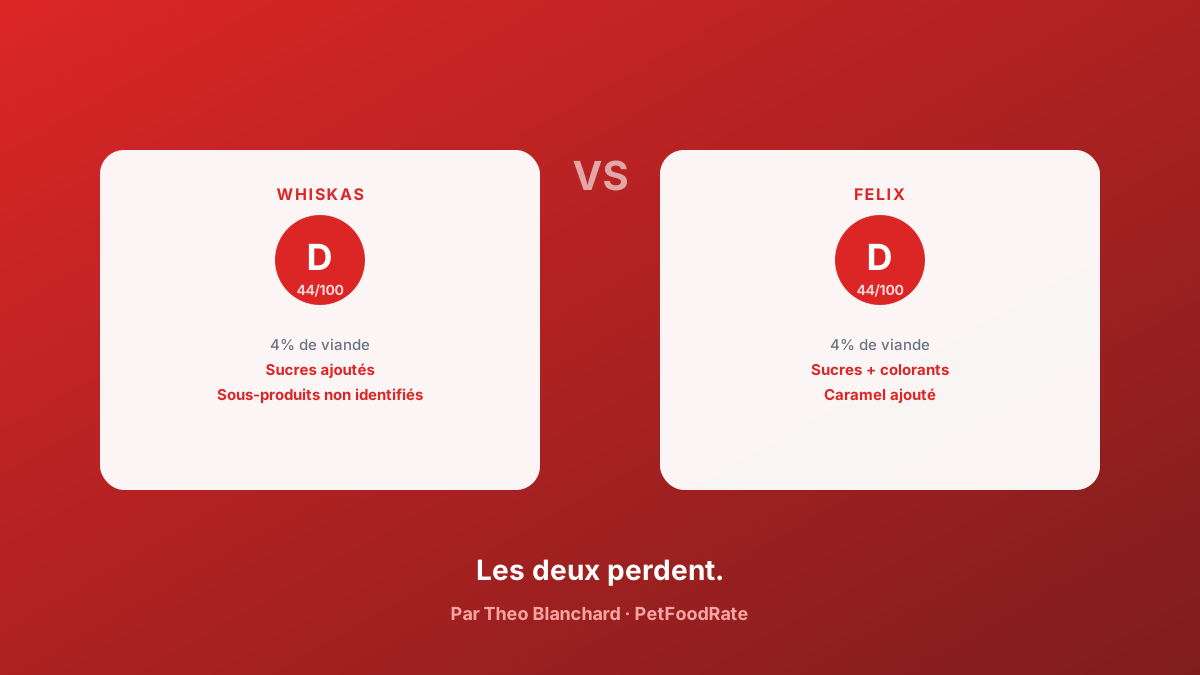
Short answer: Felix ranks five points above Whiskas in the current PetFoodRate comparison, but neither product wins a strong grade. The compared Felix wet food scores 35/100 (E) and the Whiskas wet food scores 30/100 (E).
That answer has an important limit. PetFoodRate scores products, not brand reputations. Felix and Whiskas sell many recipes, and manufacturers can change a formula by market, format or date. Always match the product name and label on the pack to the product page you are reading.
The result at a glance
| Product in the PetFoodRate catalog | Score | Grade | Strongest sub-score | Weakest sub-score |
|---|---|---|---|---|
| Felix Sensations en Sauce | 35/100 | E | Adaptability: B | Proteins and transparency: E |
| Whiskas Bouchées en Gelée | 30/100 | E | Adaptability: C | Transparency: E |
See the complete, data-generated Whiskas vs Felix comparison for the five sub-scores and the ingredient records used by the calculator.
Why Felix is five points ahead
Felix has the higher total because its stored product record scores better on adaptability. That advantage is small and does not lift the product out of grade E. Both records are held back by low protein-quality and transparency sub-scores.
This result should not be expanded into a claim that every Felix recipe is better than every Whiskas recipe. A different pouch, flavour or country label can produce a different result.
What the current manufacturer labels show
For a current label check, we reviewed representative chicken-in-jelly products on the manufacturers' UK websites on 28 August 2026.
The WHISKAS Chicken in Jelly tin lists meat and animal derivatives, including 4% chicken in the chunk, followed by cereals, minerals, vegetable protein extracts and various sugars. Its published analytical constituents include 6.7% protein and 83.7% moisture.
The FELIX As Good As It Looks Chicken in Jelly page lists meat and animal derivatives at 14%, including 8% chicken, plus vegetable protein extracts, fish derivatives, minerals and various sugars. It publishes 11.5% protein and 82% moisture and describes the food as complete and balanced.
These current manufacturer examples are useful context, but they are not interchangeable with every Whiskas or Felix product. If the composition on your pack differs from the PetFoodRate record, treat the pack as the newer source and compare that exact recipe.
Complete does not mean highly rated
"Complete" means a food is formulated to provide the required daily nutrients when fed according to its instructions. PetFoodRate's A-to-E grade answers a different question. It combines:
- protein quality;
- nutritional balance;
- undesirable ingredients;
- label transparency;
- suitability for the species and food type.
An E grade is therefore a label-based quality assessment. It is not a claim that the food is unsafe, nor a diagnosis of future illness.
How to choose between two supermarket pouches
Start with the exact pack rather than the logo. Check whether it is complete or complementary, how specifically animal ingredients are named, the analytical constituents and the feeding guide. Compare the daily cost using the recommended ration, not only the shelf price per pouch.
If you want alternatives, use the live wet cat food ranking. It separates products by score and shows the data recorded for each recipe. Some highly ranked fish fillet foods are complementary rather than complete, so do not assume a high ingredient-quality score makes them suitable as the sole diet.
For a cat with urinary, kidney, digestive, allergy or weight concerns, use the diet recommended for that individual animal by a veterinarian. A public label comparison cannot replace a clinical assessment.
Frequently asked questions
Is Felix better than Whiskas?
For the two wet foods in the PetFoodRate comparison, Felix scores 35/100 and Whiskas 30/100. Felix therefore ranks five points higher, but both remain E-grade products. This is a product comparison, not a verdict on every recipe made by either brand.
Why do Felix and Whiskas score E?
The scored records lose points for limited identification of animal ingredients, added sugars and weak label transparency. The exact formulation can vary by recipe, pack and country, so the score must be read with the product name and composition shown on its page.
Are Felix and Whiskas complete cat foods?
The current UK manufacturer pages for the representative chicken-in-jelly products describe them as complete and balanced when fed as directed. Completeness is different from the PetFoodRate quality grade: the grade evaluates five label-based criteria and is not a veterinary safety diagnosis.
What should I compare before switching cat food?
Compare the exact ingredient declaration, analytical constituents, complete or complementary status, feeding guide and cost per day. Change food gradually and ask a veterinarian for advice if your cat has a diagnosed condition or symptoms.
