How to read a pet food label in 90 seconds (the seven red flags every owner should know)
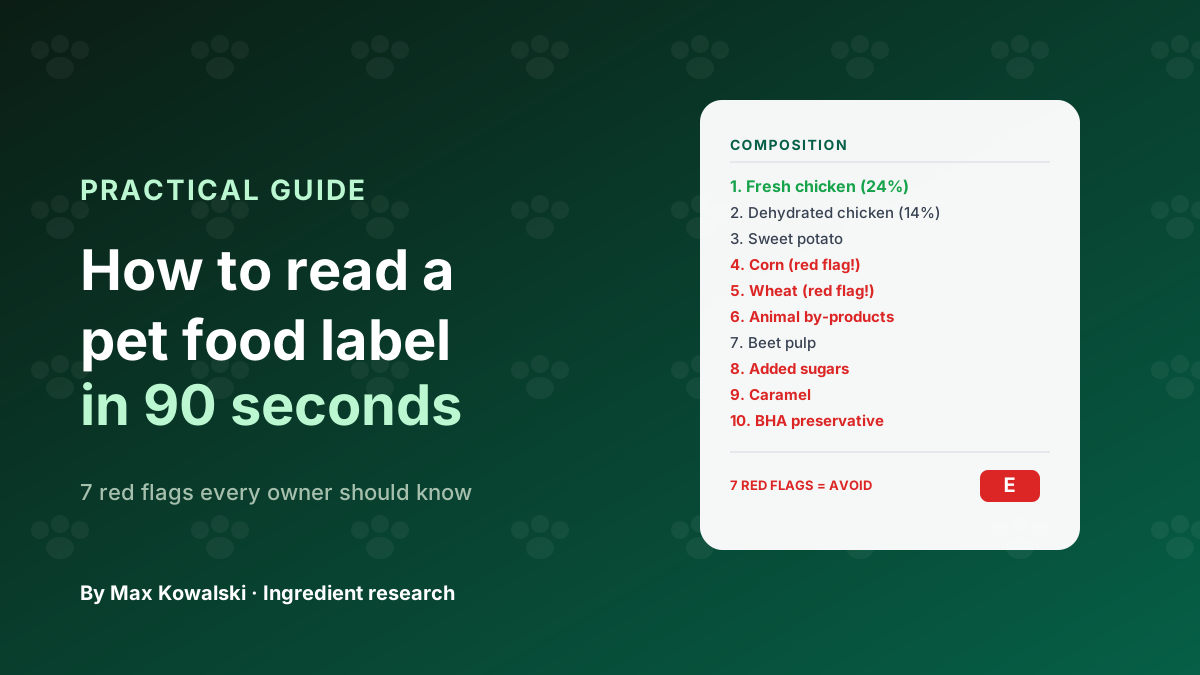
The back of a pet food bag holds more useful information than the entire front. The front is marketing. The back is regulation. Once you know what to look for, you can grade any product in 90 seconds without our database.
Here is the workflow we use at PetFoodRate, simplified into seven red flags. If a product hits one, it drops one grade. If it hits three, you should put it back on the shelf.
Red flag 1: A grain or vegetable in first position
The composition list is ordered by weight before cooking. The first ingredient is the heaviest. For dogs and cats (both carnivores or omnivores leaning carnivore), the first ingredient should be a named animal protein.
Bad: "Corn, dehydrated chicken (14 percent), wheat..." → corn is the bulk of the bag, chicken is the marketing.
Good: "Fresh chicken (24 percent), dehydrated chicken (14 percent), turkey..." → animal protein dominates the top of the list.
The exception is rabbits, guinea pigs and chinchillas, which are strict herbivores. For them, the first ingredient should be hay or alfalfa.
Red flag 2: Vague animal terms
"Meat and animal by-products", "animal derivatives", "animal fats", "transformed animal proteins", "poultry meal" without species name. These are legal terms that mean the manufacturer either does not know or does not want to tell you what species the protein came from.
The reason brands use vague terms is because they buy ingredients on commodity markets where the species varies week to week based on price. Today's "animal fats" might be chicken, next week's might be beef rendered from slaughterhouse waste. The recipe is identical on paper, the actual nutrient profile is not.
Good substitutes: "chicken fat", "salmon oil", "lamb meal", "duck dehydrated".
Red flag 3: BHA, BHT, ethoxyquin, propylene glycol
These are synthetic preservatives. BHA and BHT are linked to cancer in long-term rodent studies and are banned from human food in several jurisdictions but still legal in pet food. Ethoxyquin was originally developed as a rubber stabiliser. Propylene glycol is the same compound used in antifreeze (lower toxicity grade, but still cell-disruptive at sustained doses).
If you see any of these on the back of the bag, put it back. Modern preservation uses tocopherols (vitamin E) and rosemary extract, both of which work fine and have no known long-term harm.
Red flag 4: Added sugars
Look for "sugar", "sucrose", "glucose syrup", "molasses", "caramel" in the composition. None of these belong in pet food. Cats and dogs have minimal taste receptors for sweet but the added sugar makes them eat more (palatability boost) which boosts repeat purchases. The cost is dental disease, weight gain, and in cats, increased risk of diabetes.
This red flag is most common on cheap wet pouches (Whiskas, Friskies, Felix, Sheba, Cesar) where sugar is used to make the meat-poor sauce taste rich.
Red flag 5: Artificial colors
"Colorants", numbered colourings (E102, E110, etc), "caramel colour" (when added for cosmetics not from real ingredients). Pets do not see food colour the way humans do. Cats and dogs are essentially red-green colour-blind. Bright red kibble or bright orange chunks are aimed at the human shopper, not the eater.
Beneful, Bakers, Pedigree wet sometimes use colorants to make corn-based recipes look meatier. It is a tell. If a brand needs to dye the food to look like meat, the food is not meat.
Red flag 6: The first percentage is below 20
If the first identified meat is "chicken (4 percent)", the bag is mostly other things. Cheap wet pouches typically advertise 4 percent of the headline meat. Even some kibbles advertise 14 percent. The premium products are at 22 to 30 percent named fresh meat in first position, with another 12 to 14 percent of the same protein in dehydrated form to push the total animal content above 50 percent.
A useful rule: if the headline meat is below 20 percent and there is no second meat in the top three, it is a vegetable bag with meat flavouring.
Red flag 7: Three or more cereals in the top five
"Corn, wheat, sorghum, rice" appearing across positions 2 to 5 means cereals dominate the recipe even if the first ingredient looks acceptable. This is the ingredient-splitting trick from the Pedigree, Iams, Eukanuba playbook. Each cereal individually weighs less than the meat, so the meat appears first, but the combined cereal weight is higher than the meat.
Acceptable: one whole grain in moderation (whole oats, barley) plus a starch source (sweet potato, potato). Not acceptable: corn + wheat + sorghum + rice.
A 90-second checklist
When you pick up a bag in the supermarket, do this in order:
- Read ingredient 1. Animal protein with species named? Pass. Cereal? Failed.
- Scan for vague terms. "Meat by-products"? Failed.
- Scan for BHA, BHT, ethoxyquin, propylene glycol. Failed.
- Scan for sugar, caramel, glucose syrup. Failed.
- Scan for colorants. Failed.
- Read the first percentage. Above 20 percent? Pass. Below? Failed.
- Count cereals in top 5. Three or more? Failed.
If a bag passes all seven, it is at least a B grade. If it fails three or more, it is D or E. PetFoodRate's full methodology adds two more layers (transparency and species adaptability) for the precise letter, but this seven-flag check captures most of the signal.
What to do with this list
Print it. Stick it on the fridge. Take a photo on your phone. Use it next time you buy. The supermarket aisle was designed to make this hard. With this checklist it takes 90 seconds.
If you want to skip the work, our database at /rankings has done it for 123 products and growing. Search for the brand or the type, look at the letter, click through for the breakdown.
The point of PetFoodRate is not to replace your judgment. It is to give you the cheat sheet the manufacturers do not want you to have.
— Max Kowalski, Ingredient Research, PetFoodRate